Water Flosser vs. String Floss: Which Actually Cleans Better?
Hate flossing? A water flosser can be a real alternative for some people, but not for everyone. Here's what each tool actually does, what a 35-trial research review found, who's better off with which, how to use both correctly, and when to call your dentist.
By Dr. Brandon J. Wolf, DMD · November 2, 2026 · 6 min read
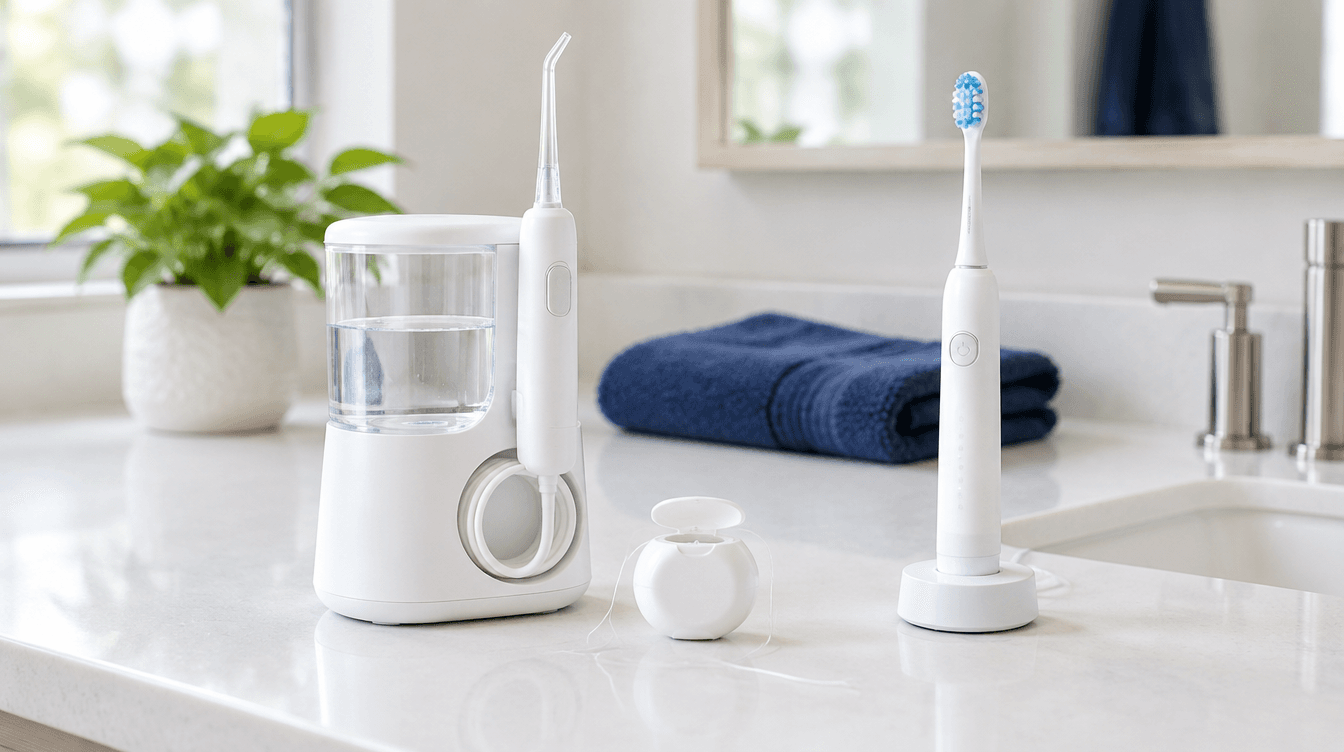
Why your toothbrush can't reach everything
A toothbrush does a good job on the front, back and chewing surfaces of your teeth. The tight spots where two teeth touch are another story. Bristles skim right past them, and plaque left there day after day is where gum inflammation tends to start.
That's why the American Dental Association recommends cleaning between your teeth once a day. Its MouthHealthy site is relaxed about the details. Morning or night doesn't matter, as long as you're thorough, and string floss isn't the only tool on the list. Dental picks, tiny interdental brushes, pre-threaded flossers and water flossers all count.
So the real question isn't whether to clean between your teeth. It's which tool does the job well enough, and comfortably enough, that you'll actually use it every day.
How string floss works
Floss works by friction. You slide it between two teeth, curve it into a C shape against one tooth, and rub up and down to scrape plaque off its side, including the edge just under the gumline. Then you curve it the other way and clean the neighboring tooth.
That scraping is its biggest advantage. Plaque is a sticky film, not loose crumbs, and Cleveland Clinic points out that string reaches between the teeth and below the gumline in places a water flosser can't always get to.
The downside is that floss takes some skill. MouthHealthy warns against snapping it into your gums, since flossing too hard can damage the tissue, while being too gentle might leave plaque behind. It's also slow and fiddly around braces, bridges and stiff fingers.
How a water flosser works
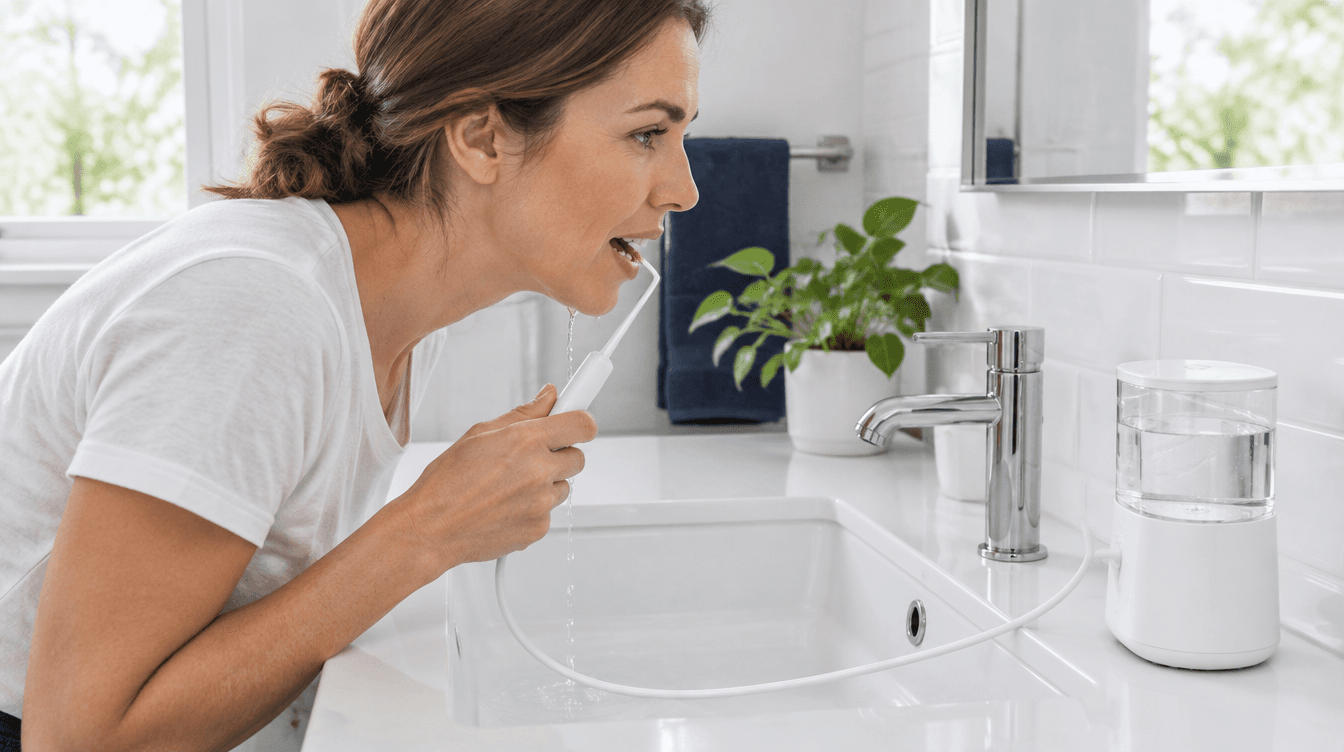
A water flosser, also called an oral irrigator or dental water jet, shoots a thin, pulsing stream of water at your teeth and gums. You trace the tip along the gumline and pause between teeth, and the water flushes out food and plaque that brushing missed.
It's easy on the hands and gets around dental work that floss snags on. What it can't do as well is wipe. Water rinses; it doesn't press against a tooth and scrape it the way a strand does. That's why Cleveland Clinic periodontist Sasha Ross, DMD, says water flossers "aren't a substitute for string floss," adding that "they can be used in addition to it."
What the research actually says
The most thorough look at this question is a 2019 Cochrane review led by Helen Worthington, which pooled 35 randomized trials with 3,929 adults. One caveat before the findings: the authors rated nearly all of the evidence low or very low certainty, said the differences may not be clinically important, and noted that most outcomes were measured over 1 to 6 months, not years. The review's authors called the evidence for oral irrigators "limited and inconsistent," a conclusion the ADA repeats in its own summary.
With that in mind, here's what the review found:
- Floss plus brushing may reduce gum inflammation (gingivitis) compared with brushing alone. The evidence was rated low certainty.
- A water flosser plus brushing may reduce gingivitis at 1 month, but not at 3 or 6 months, and showed no clear drop in plaque. Very low to low certainty.
- Head to head, a water flosser may reduce gingivitis more than floss at 1 month, but that rests on just 2 trials.
- Interdental brushes may reduce gingivitis more than floss at 1 and 3 months.
- None of the trials measured cavities between teeth, as the ADA notes in its own summary of the review.
Water flosser vs. string floss, side by side
So anyone telling you one tool is proven to be far better is overselling. Cleaning between your teeth once a day helps, several tools can do it, and the one you'll use consistently is worth more than a slightly better one sitting in a drawer. Here's how the two compare in practice:
- Sticky plaque: floss scrapes it off the tooth surface; a water flosser mainly rinses and loosens it.
- Below the gumline: floss can slip just under the gum when you curve it; a water flosser can't always reach the same spots.
- Around dental work: a water flosser gets under bridges and around implants and braces, where floss is slow or won't pass.
- Learning curve: floss takes practice and steady hands; a water flosser is mostly aim and move.
- Space and upkeep: floss fits in a pocket; countertop water flossers need counter space and an outlet, cordless ones need charging, and both need replacement tips.
- Mess: with a water flosser you lean over the sink and let the water run out of your mouth as you go.
- Gentleness: both should feel gentle. Snapping floss or using a water flosser the wrong way can irritate your gums.
Who's better off with a water flosser
For most adults with healthy gums and no dental work, floss or an interdental brush does the job. A water flosser earns its place when one of these applies:
- Braces: brackets and wires make threading floss slow, and orthodontic tips are made for exactly this.
- A bridge: the false tooth is joined to its neighbors, so floss can't slide down between them.
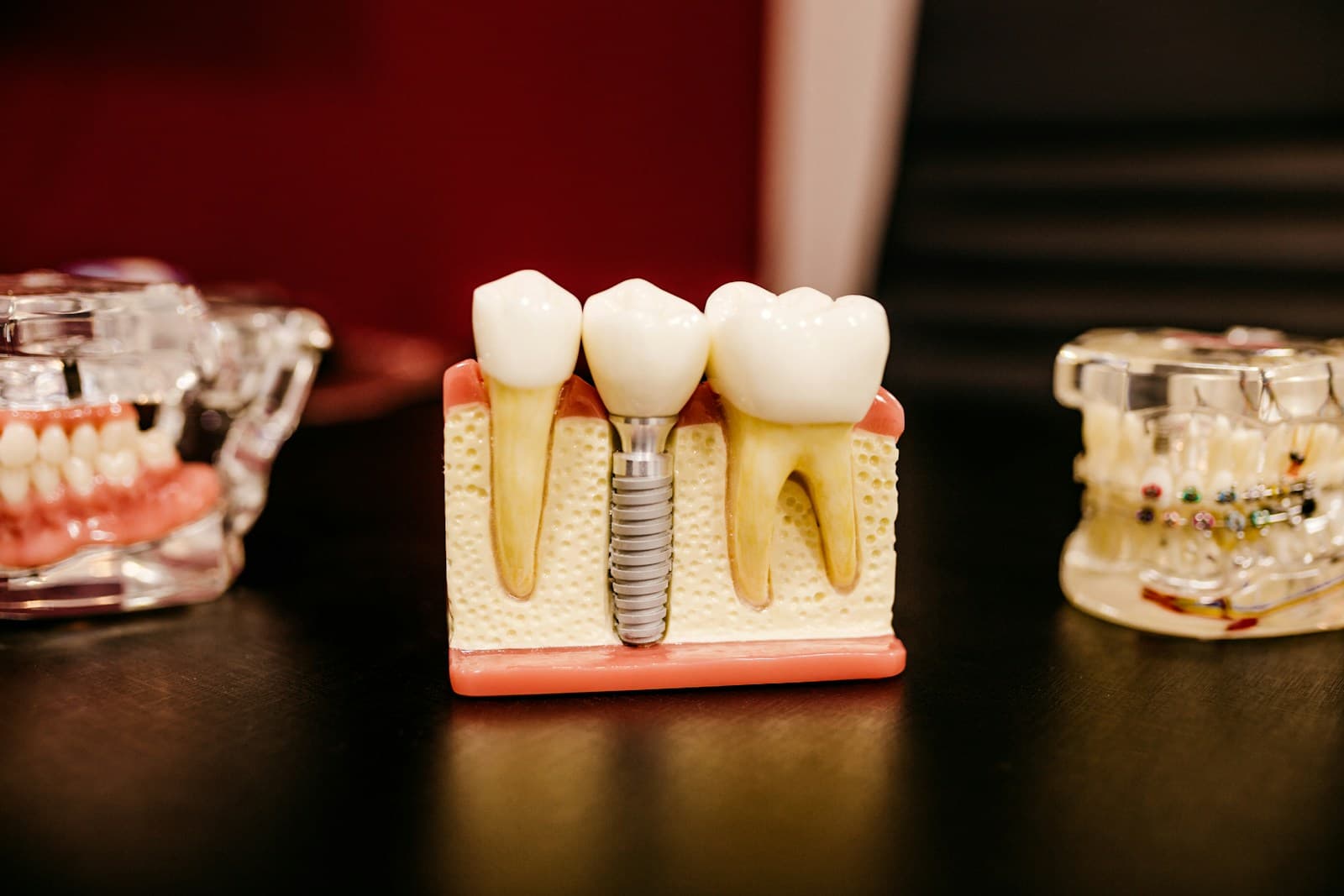
- Dental implants: Cleveland Clinic lists implant patients among the people who benefit most.
- Wide gaps between teeth, which a stream of water reaches easily.
- Trouble handling floss, from arthritis or limited hand movement, for example: MouthHealthy says a water flosser can be useful if you find other tools hard to work with.
- People who simply won't floss: daily use of any reasonable tool beats an occasional effort with the ideal one.
How to use each one the right way
Technique matters more than the tool. These steps come from the ADA's MouthHealthy guide and Cleveland Clinic.
- Floss: guide it between two teeth with a gentle rubbing motion. Never snap it into the gums.
- Floss: at the gumline, curve it into a C shape against one tooth and slide it gently into the space between gum and tooth, then rub up and down. Repeat on the neighboring tooth.
- Water flosser: fill the reservoir with warm tap water and choose a tip and pressure setting.
- Water flosser: lean over the sink, run the stream along the gumline and between each tooth, and let the water fall into the sink.
- Water flosser: follow the manufacturer's directions, since using one incorrectly can irritate your gums.
- Shopping: look for the ADA Seal of Acceptance. To earn it, a floss or interdental cleaner has to work better with brushing than brushing alone, and be shown not to harm gums or dental work.
What we do at Illumination
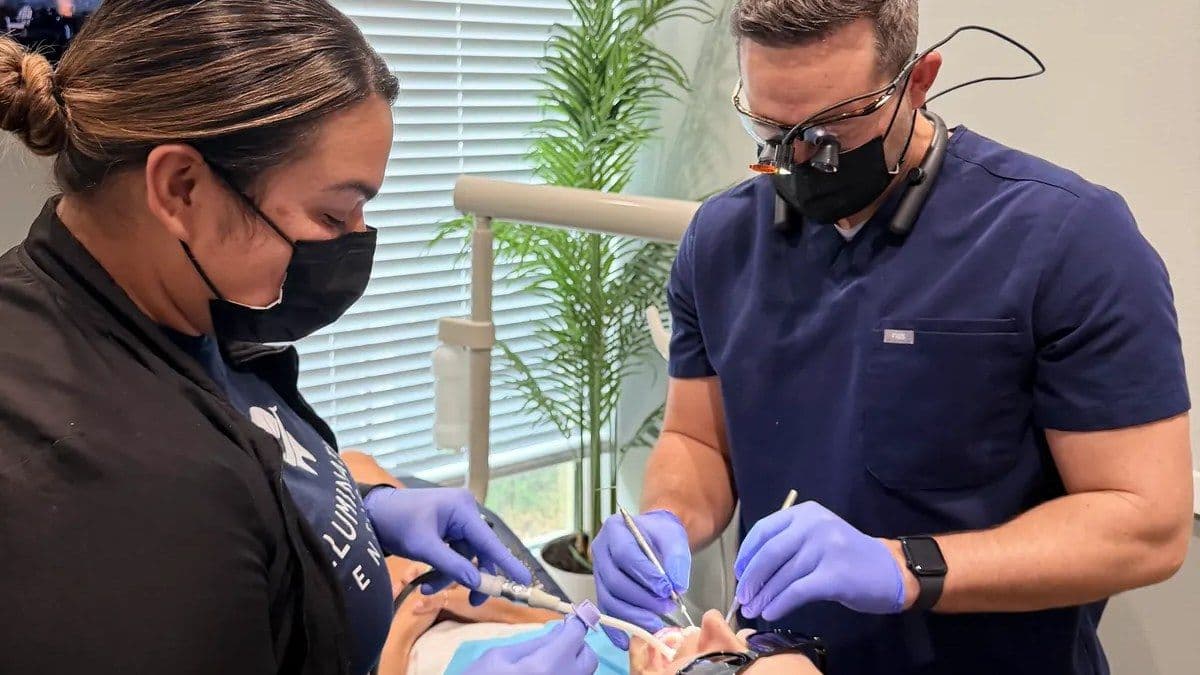
Every cleaning at our Lutz office includes removing plaque and tartar above and below the gumline. That second part matters: once plaque hardens into tartar, no floss or water flosser at home can remove it. We also check your gums at every visit for early signs of inflammation.
Oral hygiene education on brushing and flossing technique is part of preventive care here, so ask us at your next cleaning which tool suits your teeth and any dental work. If you have a bridge, cleaning under the false tooth with a floss threader or a water flosser is part of keeping it healthy.
When gum pockets have already deepened, home tools alone can't reach far enough. Scaling and root planing cleans below the gumline, and for deeper pockets we may place Arestin, a localized antibiotic. Patients treated for gum disease usually move to cleanings every 3 to 4 months instead of every 6.
When to call us
Cleaning between your teeth should feel gentle, not painful. Call us at (813) 906-5668 or book online if you notice:
- Pain when you floss or use a water flosser that doesn't go away
- Gums that are red, swollen or bleed when you brush or floss
- Gums that seem to be pulling back from your teeth
- Tenderness around a bridge, crown or implant
Frequently asked questions
Can a water flosser replace regular flossing?
For some people it can serve as their daily between-teeth cleaner, and the ADA lists water flossers among acceptable tools. Cleveland Clinic recommends using one alongside string floss rather than instead of it, because floss scrapes plaque in ways water can't. We can help you decide based on your gums and any dental work.
How often should I use a water flosser?
At least once a day, the same as the ADA's recommendation for cleaning between your teeth with any tool. If you also use string floss, Cleveland Clinic's periodontist treats the water flosser as an add-on to it, not a replacement.
Does it matter if I floss before or after brushing?
According to the ADA's MouthHealthy site, when you clean between your teeth matters less than doing it thoroughly once a day.
Are water flossers good for braces and implants?
Yes. Orthodontic tips are designed to clean around brackets and wires, and Cleveland Clinic lists people with implants, bridges or wide gaps among those who benefit most.
Are interdental brushes better than floss?
A 2019 Cochrane review found interdental brushes may reduce gum inflammation more than floss at 1 and 3 months, though the evidence was low certainty. Ask us which size suits the spaces between your teeth.
What does the ADA Seal mean on floss or a water flosser?
It means the ADA's Council on Scientific Affairs reviewed evidence that the product is safe and that using it with brushing works better than brushing alone.

Ready to talk about your smile?
We'll take a look, walk you through what's going on, and lay out your options before anything happens.